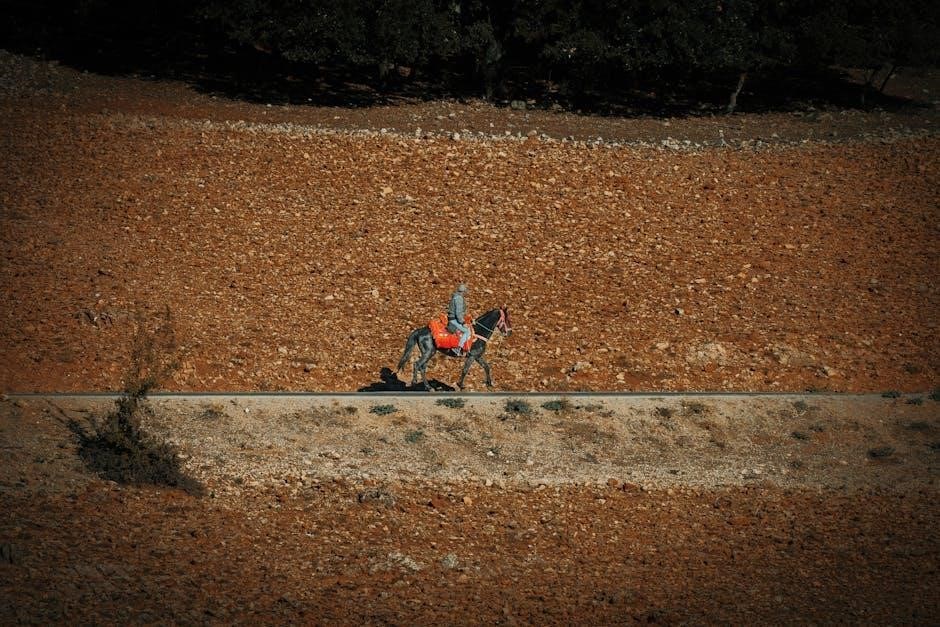
Don Quixote PDF: A Comprehensive Guide
Discover immersive adventures within a Don Quixote PDF, exploring Alonso Quijano’s journey as a knight, readily available for digital reading experiences.
Understanding the Novel’s Popularity in PDF Format
Don Quixote’s enduring appeal finds a new home in the convenient PDF format, allowing readers to delve into the knight’s adventures anywhere, anytime. The digital accessibility removes barriers, fostering wider engagement with Cervantes’ masterpiece. PDFs preserve the text’s integrity, offering a faithful reproduction of the original work, crucial for scholarly study and literary appreciation.
The format’s portability mirrors Don Quixote’s own wandering spirit, enabling readers to accompany him on his quests across digital landscapes. Furthermore, the ability to search within the PDF streamlines research, pinpointing key episodes and themes. This ease of access, combined with the novel’s timeless themes of idealism, reality, and the human condition, explains the surging popularity of Don Quixote PDFs today.
Availability of Don Quixote PDFs Online
Numerous online platforms host Don Quixote PDFs, catering to diverse reading preferences. Websites like royallib.com offer free downloads in various formats, including PDF, fb2, doc, and txt, allowing access to the adventures of the iconic knight. However, be mindful of copyright restrictions and source reliability when choosing a download.
Dedicated ebook libraries and digital bookstores also feature paid PDF versions, often with enhanced features like adjustable fonts and integrated dictionaries. Some platforms offer online reading directly within a web browser, eliminating the need for downloads. Sony CONNECT Inc. has published a 2009 edition; The widespread availability reflects the novel’s public domain status in many regions, ensuring broad access to Don Quixote’s captivating tale.
Free PDF Downloads of Don Quixote
Accessing the thrilling adventures of Don Quixote is readily achievable through numerous free PDF downloads. Platforms like royallib.com provide the complete text of Cervantes’ masterpiece in PDF format, alongside other digital formats, enabling readers to immerse themselves in Quijano’s world without cost. These resources often present the novel as a text file, easily convertible to PDF.
However, users should exercise caution regarding download sources, verifying their legitimacy to avoid malware or incomplete files. While many sites offer free access due to the novel’s age and public domain status, quality can vary. Reading directly on websites offering online versions, rather than downloading, can also bypass potential risks, allowing immediate enjoyment of Don Quixote’s escapades.
Paid PDF Versions and Enhanced Editions
While free PDFs of Don Quixote abound, paid versions often offer enhanced reading experiences. Sony CONNECT Inc. released a version in 2009, potentially including features like improved formatting, interactive elements, or scholarly annotations that enrich the adventures of the iconic knight. These editions prioritize readability and may offer adjustable font sizes for optimal comfort.
Purchasing a PDF can also support publishers and contribute to the continued availability of quality literature. Enhanced editions might include biographical information about Cervantes, historical context surrounding the novel, or critical analyses of its themes. These premium options cater to readers seeking a more comprehensive understanding of Don Quixote’s enduring legacy and the captivating world of his chivalric pursuits.
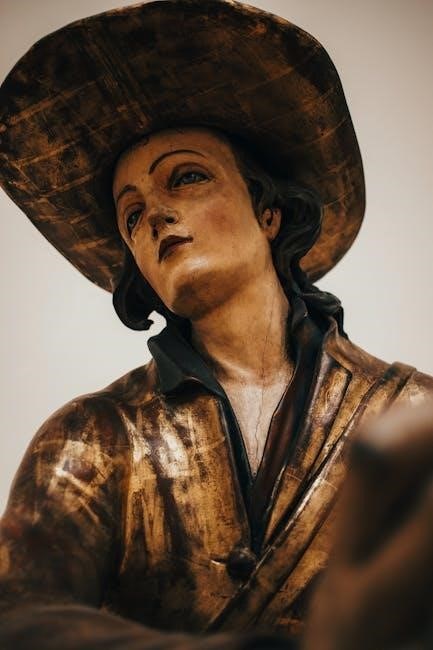
The Story of Don Quixote: A Summary
Explore the tale of Alonso Quijano, consumed by chivalric romances, embarking on fantastical adventures as Don Quixote, a self-proclaimed knight-errant.
Alonso Quijano’s Transformation into Don Quixote
Alonso Quijano, a middle-aged gentleman from La Mancha, undergoes a remarkable metamorphosis fueled by an obsessive passion for chivalric romances. Immersed in tales of knights, battles, and courtly love, his reality begins to blur with fiction. He neglects his estate and dedicates himself to emulating the heroes he so admires.
This fervent reading ultimately leads to a loss of sanity, prompting Quijano to reinvent himself as Don Quixote de la Mancha, a knight-errant determined to revive chivalry. He dons makeshift armor, renames his horse Rocinante, and seeks out adventures to right wrongs and defend the helpless. The PDF versions vividly portray this descent into delusion, showcasing the initial stages of his transformation and the unwavering belief in his self-imposed role.
His journey, documented within the PDF, is a poignant exploration of identity and the power of imagination, marking the beginning of his legendary, and often comical, escapades.
The Influence of Chivalric Romances
Chivalric romances profoundly shaped Don Quixote’s worldview, serving as the catalyst for his transformation. These popular narratives of the time, filled with heroic knights, damsels in distress, and fantastical quests, captivated Quijano and ultimately eroded his grasp on reality. The PDF editions highlight how these stories weren’t merely entertainment, but a deeply influential force.
Quixote’s adventures directly mirror the tropes found within these romances; he seeks to emulate Amadís de Gaula and other fictional heroes, interpreting the world through the lens of chivalry. He perceives windmills as giants and inns as castles, driven by the narratives ingrained in his mind. Accessing the story via PDF allows readers to trace these influences directly, observing how specific literary elements manifest in Quixote’s actions.
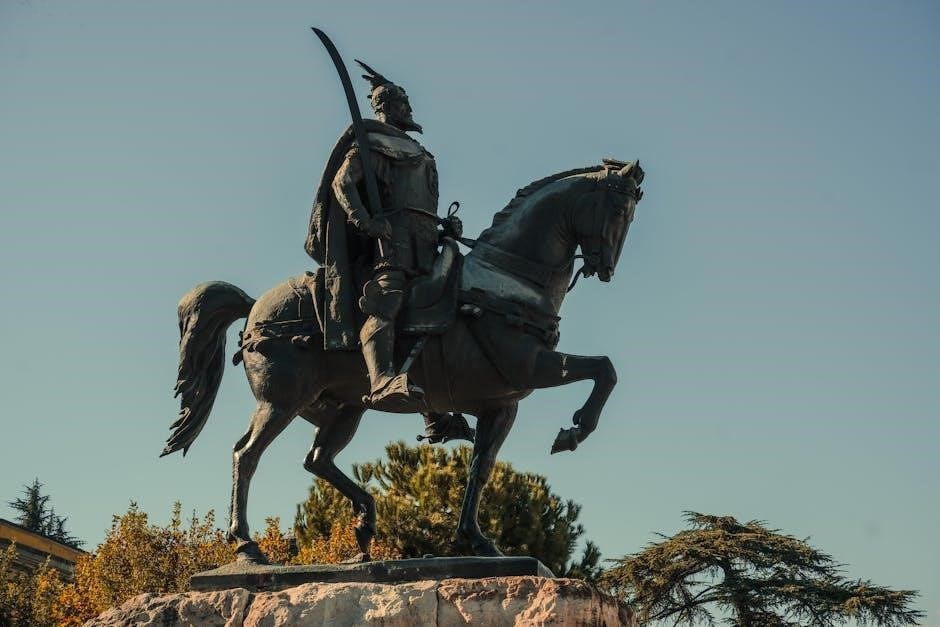
The PDF format enhances understanding of Cervantes’ satire, revealing how he both celebrates and critiques this genre.
Don Quixote’s Adventures with Sancho Panza
Don Quixote’s partnership with Sancho Panza forms the heart of the novel, vividly portrayed within accessible PDF versions. Sancho, a pragmatic peasant, serves as Quixote’s squire, offering a grounded counterpoint to his master’s idealistic delusions. Their adventures, often comical and poignant, unfold as Quixote pursues chivalric fantasies while Sancho seeks practical rewards.
PDF editions allow readers to closely follow their dynamic – Quixote’s soaring rhetoric contrasted with Sancho’s earthy wisdom. They encounter a series of misadventures, from battling windmills to freeing galley slaves, each episode highlighting the clash between illusion and reality. The PDF format facilitates easy referencing of these key encounters.
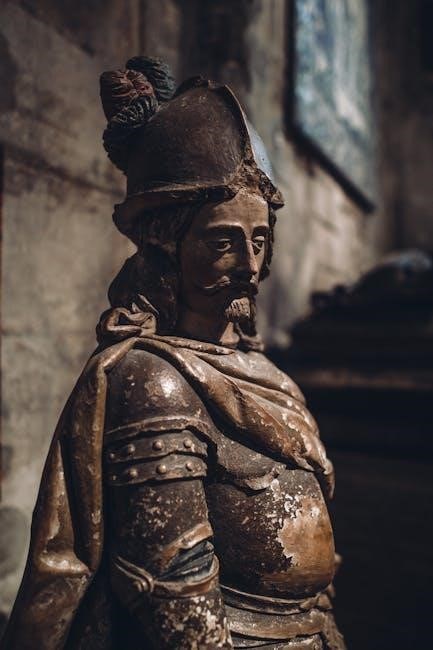
Exploring these adventures in PDF format emphasizes the enduring appeal of their contrasting personalities and their shared journey.
Key Episodes and Encounters
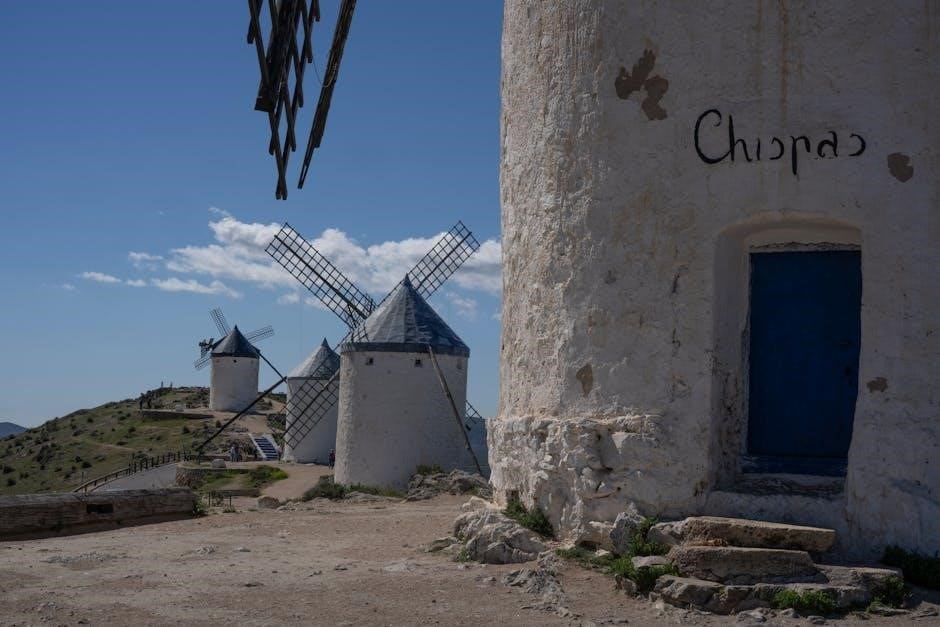
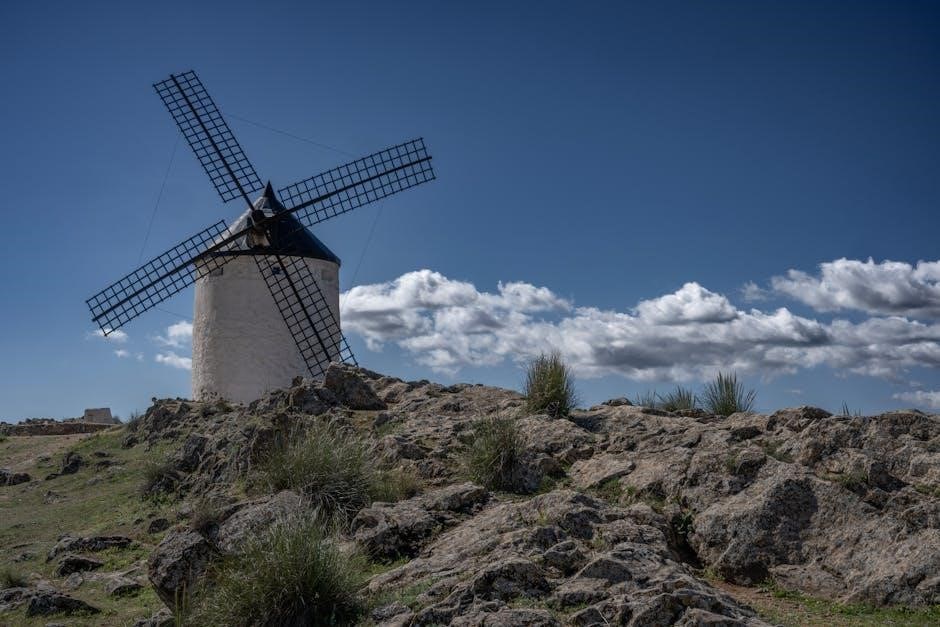
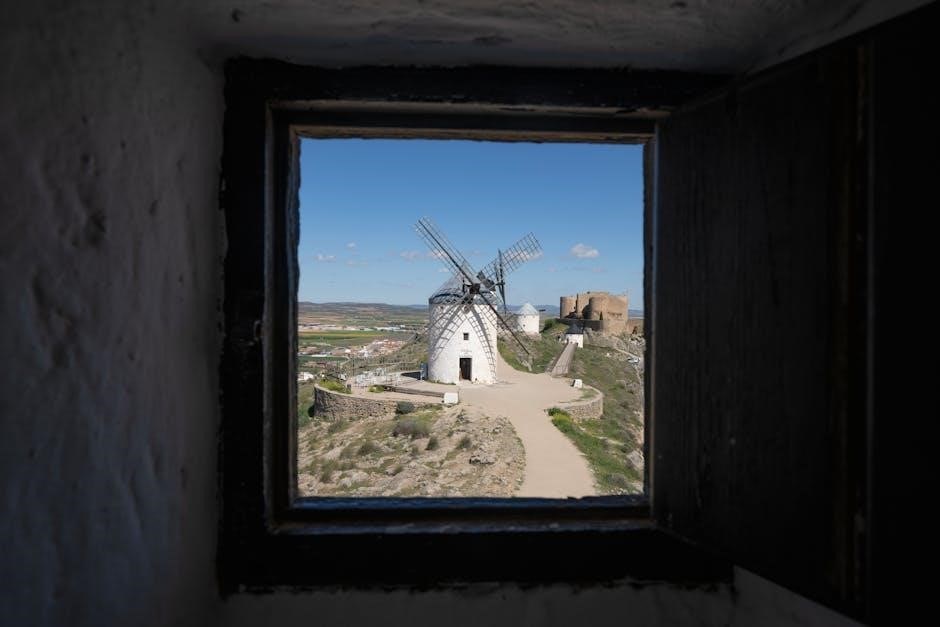
Don Quixote’s adventures, readily accessible in PDF format, are punctuated by iconic episodes. The famed battle with windmills, misinterpreted as giants, exemplifies his distorted perception of reality. Encounters with Dulcinea del Toboso, his idealized lady, reveal the power of imagination and self-deception.
PDF versions allow detailed examination of episodes like the liberation of galley slaves, showcasing Quixote’s flawed sense of justice. His interactions with various travelers and innkeepers, often leading to comical misunderstandings, are vividly presented. These encounters, easily navigable within a PDF, highlight the novel’s satirical edge.
The PDF format enhances the reading experience, allowing for close study of these pivotal moments and their contribution to the overarching themes of the story.
Analyzing Don Quixote: Themes and Motifs
Explore the adventures through a PDF, revealing themes of reality versus illusion, the decline of chivalry, and the captivating power of madness.
The Nature of Reality and Illusion
Don Quixote’s adventures, readily accessible in PDF format, profoundly explore the blurred lines between reality and illusion. His obsession with chivalric romances fundamentally alters his perception, causing him to interpret ordinary events as grand, heroic quests. Windmills become giants, inns transform into castles, and peasant girls are reimagined as noble ladies.
This distortion isn’t merely a personal failing; Cervantes uses it to question the very nature of truth and perception. The PDF allows readers to closely follow Quixote’s descent into a self-created reality, prompting reflection on how narratives shape our understanding of the world. Is Quixote truly mad, or is he simply living a more imaginative life? The PDF format facilitates detailed analysis of these pivotal moments, highlighting the subjective nature of experience and the power of belief.
The Critique of Chivalry
Don Quixote’s adventures, conveniently found in PDF editions, serve as a sharp and humorous critique of the chivalric romances so popular in Cervantes’ time. The novel doesn’t simply dismiss these tales; it deconstructs them, exposing their artificiality and inherent contradictions through Quixote’s often-disastrous attempts to emulate them.
The PDF format allows for a focused examination of how Cervantes satirizes the conventions of chivalry – the idealized love, the exaggerated heroism, and the rigid codes of conduct. Quixote’s failures, often stemming from his misapplication of chivalric principles to a mundane world, highlight the absurdity of these ideals. By presenting a protagonist who embodies and then undermines these values, Cervantes questions their relevance and ultimately advocates for a more pragmatic worldview. The PDF enhances this analysis, enabling close reading of key episodes.
Social Commentary and Satire
Don Quixote’s adventures, readily accessible in PDF format, extend beyond a critique of chivalry to offer a broader social commentary on 17th-century Spain. Cervantes utilizes satire to expose the rigid social hierarchies, the economic hardships, and the prevailing attitudes of the time. The PDF allows readers to dissect how Quixote’s interactions with various characters – from nobles to peasants – reveal societal flaws.
Through Quixote’s delusions and misinterpretations, Cervantes subtly critiques the Spanish legal system, the Church, and the aristocracy. The novel’s humor often masks a deeper observation of human folly and social injustice. A PDF version facilitates focused study of these satirical elements, allowing for detailed analysis of Cervantes’s nuanced portrayal of Spanish society. It’s a window into a world grappling with change and questioning established norms, all within a captivating narrative.
The Role of Madness and Sanity
Don Quixote’s adventures, easily explored through a PDF edition, fundamentally revolve around the blurred lines between madness and sanity. Alonso Quijano’s descent into delusion, fueled by chivalric romances, prompts questions about perception and reality. The PDF format allows for close examination of how Quixote’s “madness” shapes his interactions and interpretations of the world.
However, Cervantes doesn’t simply portray Quixote as irrational. His character often exhibits moments of lucidity and wisdom, challenging the reader to question who truly possesses sound judgment. Is it Quixote, living by a self-created code, or the “sane” characters bound by societal constraints? A digital PDF enables focused analysis of these contrasting states, revealing Cervantes’s complex exploration of the human psyche and the subjective nature of truth.
Historical Context of Don Quixote
Explore Cervantes’s Spain, the Golden Age, within a Don Quixote PDF; understand 1605 & 1615 publications, and historical tapestry series analyses.
Miguel de Cervantes and the Spanish Golden Age
Miguel de Cervantes Saavedra, the author of Don Quixote, lived during Spain’s Siglo de Oro – the Spanish Golden Age. This period, roughly spanning from 1492 to 1681, witnessed a flourishing of Spanish literature, art, and culture. Cervantes’s life mirrored the era’s complexities; he was a soldier, a captive, and a tax collector, experiences that profoundly shaped his writing.
The Golden Age was a time of immense power and wealth for Spain, fueled by discoveries in the New World. However, it was also marked by religious and political tensions. Cervantes’s work often subtly critiques the societal norms and values of his time. Accessing Don Quixote in PDF format allows modern readers to connect with this historical context, understanding the novel not just as a fictional tale, but as a reflection of a pivotal moment in Spanish history. The PDF preserves the original text, offering a direct link to Cervantes’s world.
The Publication History of Don Quixote (1605 & 1615)
Don Quixote wasn’t published as a single, complete work. The first part, detailing the initial adventures of Alonso Quijano, appeared in 1605. It quickly gained popularity, but Cervantes didn’t immediately release a sequel. Ten years later, in 1615, the second part was published, responding to a spurious continuation released by another author.
This staggered publication history is crucial for understanding the novel’s evolution. The second part demonstrates Cervantes’s awareness of his readership and his engagement with critical responses. Modern Don Quixote PDFs often present both parts as a unified narrative, offering a complete reading experience. Digital formats allow easy access to both editions, preserving the historical context of their separate releases and enabling comparative study of Cervantes’s evolving vision of his iconic character and his thrilling adventures.
The Tapestry Series and Historical Analysis
Don Quixote inspired a famous tapestry series, woven in the 17th century, offering a visual record of the novel’s key adventures. These tapestries provide invaluable insights into how the story was perceived during Cervantes’s time, reflecting contemporary interpretations of his satire and social commentary. Analyzing these artworks alongside the Don Quixote PDF text enriches our understanding of the novel’s cultural impact.
Historical analysis, aided by readily available digital PDFs, reveals the Spanish Golden Age context. Cervantes wrote during a period of societal change and declining Spanish power. The novel’s critique of chivalry and exploration of reality resonated with these historical currents. Accessing both the text and related historical materials through PDF formats facilitates a deeper, more nuanced appreciation of the novel’s enduring relevance and thrilling adventures.
Don Quixote PDF: Features and Accessibility
Enjoy seamless reading of Don Quixote’s adventures in PDF format, compatible with Windows and various apps, offering adjustable fonts for optimal readability.
PDF Format Advantages for Reading
The PDF format presents numerous benefits for delving into the captivating adventures of Don Quixote. Its primary advantage lies in preserving the original formatting, ensuring the text appears as intended, regardless of the device or operating system used – including Windows 95 and later versions. This consistency is crucial when appreciating Cervantes’ intricate prose and the nuances of the narrative.
Furthermore, PDFs are easily shareable and portable, allowing readers to carry Don Quixote’s epic tale with them wherever they go. The format also supports features like searchable text, making it simple to locate specific passages or references to key episodes within the novel. Many PDF readers offer adjustable font sizes and styles, enhancing readability and catering to individual preferences, ensuring a comfortable reading experience for all who embark on Quixote’s journey.
Font Options and Readability
Exploring the adventures of Don Quixote in PDF format offers significant control over readability through customizable font options. Many PDF readers allow users to adjust font size, style (serif or sans-serif), and even line spacing to suit their individual preferences and visual needs. This is particularly beneficial for readers who may find smaller fonts straining or prefer a specific typeface for enhanced comprehension.
The ability to modify the font directly impacts the reading experience, making Cervantes’ classic more accessible and enjoyable. Choosing a clear, legible font can minimize eye fatigue during extended reading sessions, allowing readers to fully immerse themselves in Quixote’s world. Experimenting with different fonts can also reveal subtle nuances in the text, enhancing appreciation for the author’s artistry and the richness of the narrative.
Platform Compatibility (Windows, etc.)
Don Quixote PDFs demonstrate broad platform compatibility, ensuring accessibility across a wide range of operating systems. Windows users, from those utilizing older systems like Windows 95 to the latest versions, can readily open and read these files with commonly available PDF readers.
Furthermore, compatibility extends beyond Windows; macOS, Linux, and even mobile operating systems like iOS and Android support PDF viewing. This universal format accessibility means the adventures of Don Quixote are available on desktops, laptops, tablets, and smartphones. The widespread adoption of the PDF standard guarantees a consistent reading experience regardless of the device, making Cervantes’ masterpiece conveniently available to a global audience.
App Availability for Reading Don Quixote PDFs
Numerous applications facilitate reading Don Quixote PDFs, enhancing the digital reading experience. Dedicated eBook readers, such as those offered by Sony CONNECT Inc., provide optimized viewing and features tailored for long-form texts like Cervantes’ novel.
Beyond specialized readers, widely used PDF viewers like Adobe Acrobat Reader, Foxit Reader, and others are readily available for free download across multiple platforms. These apps often include functionalities like adjustable font sizes, bookmarking, and search capabilities, improving accessibility to the adventures of Don Quixote. Many online platforms also allow direct reading within a web browser, eliminating the need for separate software installation, offering convenient access to the story.
Don Quixote Adaptations and Related Works
Explore film versions and literary influences stemming from Don Quixote, notably its presence as a beloved book in “Dead Poets Society”.
Film Adaptations of Don Quixote
Numerous cinematic interpretations have attempted to capture the essence of Cervantes’ masterpiece, though a truly definitive adaptation remains elusive. Several films directly portray Don Quixote’s adventures, each offering a unique perspective on his fantastical journey and tilting at windmills.
Notably, a 1960 Soviet-Spanish co-production, simply titled Don Quixote, stands out for its artistic merit. More recently, Terry Gilliam’s famously troubled production, The Man Who Killed Don Quixote (eventually released in 2018), gained notoriety for its decades-long development and behind-the-scenes challenges.
These adaptations, often available digitally, allow audiences to visually experience the iconic scenes and characters from the novel, complementing the reading experience offered by Don Quixote PDFs. They demonstrate the enduring appeal and adaptability of Cervantes’ story across different mediums.
Influence on Literature and Art
Don Quixote profoundly impacted subsequent literature, establishing key narrative techniques and archetypes. Its meta-fictional elements, self-awareness, and exploration of reality versus illusion resonated deeply with later authors. The novel’s influence extends to diverse genres, inspiring works that question perception and societal norms.
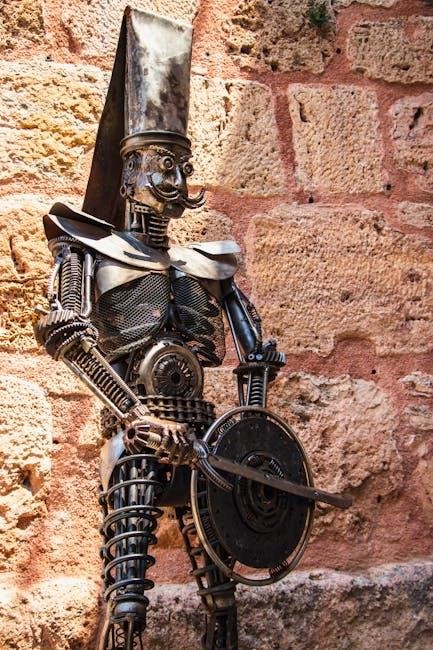
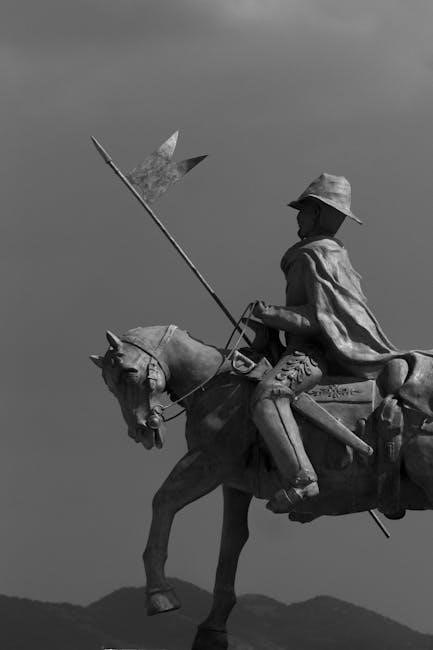
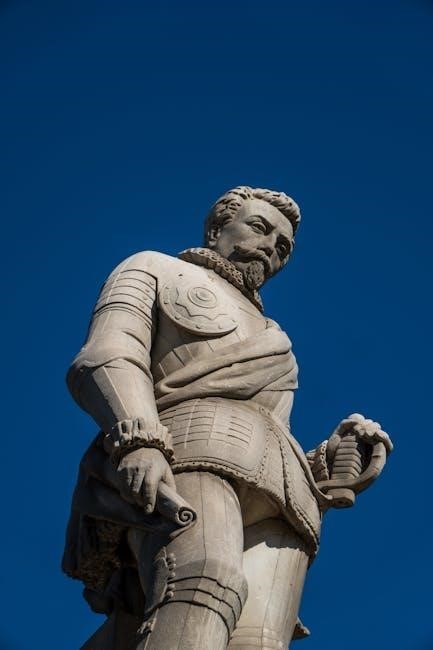
Artists have also frequently drawn inspiration from Cervantes’ tale, depicting scenes from Don Quixote’s adventures in paintings, illustrations, and sculptures. The character himself became a symbol of idealism, delusion, and the human condition, frequently appearing in artistic representations.
Accessing Don Quixote through PDFs allows readers to trace these influences, understanding how the novel’s themes and characters continue to echo throughout artistic and literary history, solidifying its enduring legacy.
Connections to “Dead Poets Society” (as a favorite book)
Don Quixote’s resonance extends into popular culture, notably featured as a beloved book in the film “Dead Poets Society.” Paulino’s declaration of Don Quixote as a “book for life” highlights its enduring power to inspire and challenge conventional thinking, mirroring the film’s themes of nonconformity and seizing the day.
The novel’s exploration of idealism and the pursuit of personal meaning aligns with the film’s message of finding one’s own voice. Both works champion individuality against societal pressures, encouraging readers and viewers to question established norms.
Reading Don Quixote in PDF format allows a deeper engagement with the text that captivated Paulino, fostering a connection to the film’s intellectual and emotional core, and understanding its lasting impact.