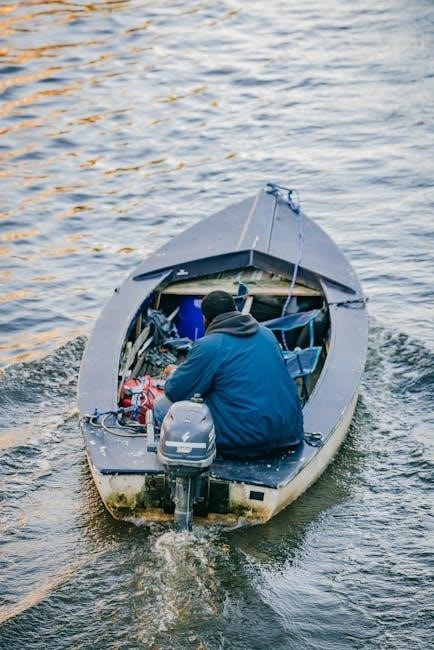
Maintaining optimal engine cooling is crucial, and a Johnson outboard water pump replacement ensures peak performance. This guide provides detailed instructions for a successful DIY repair.
Why Replace Your Water Pump?
A failing water pump severely compromises your Johnson outboard’s cooling system, potentially leading to catastrophic engine overheating and damage. Low water pressure, a common symptom, often indicates a worn impeller or a cracked pump housing. Regular replacement, as preventative maintenance, avoids costly repairs. If your outboard runs hotter than usual, or exhibits reduced water flow, immediate inspection and potential replacement are vital. Ignoring these signs risks significant engine damage, impacting performance and longevity. Addressing this promptly ensures reliable operation.
Tools and Materials Needed
Essential tools include a socket set, torque wrench, screwdrivers (flathead and Phillips), pliers, and potentially a gearcase puller. Materials required are a new water pump impeller, replacement gaskets and seals (often included in a kit), marine grease, and a service manual specific to your Johnson outboard model. Having a container to catch fluids and cleaning supplies is also recommended. Always prioritize using quality replacement parts for optimal performance and longevity.
Disassembly of the Johnson Outboard Water Pump
Begin by removing the lower unit, disconnecting the shift linkage, and carefully extracting the water pump housing for inspection and component replacement.
Removing the Lower Unit
Disconnect the battery to prevent accidental starting. Remove the shift rod linkage and any wiring connected to the lower unit. Support the gearcase weight while removing the mounting bolts – typically 3/8 or 7/16 inch. Carefully lower the unit, ensuring no wires or linkages remain connected. Inspect the shift rod for damage during removal. A clean workspace is essential for a smooth reinstallation process later. Remember to properly store all removed parts for reassembly, labeling them if necessary to avoid confusion.
Disconnecting the Shift Linkage
Before removing the lower unit, carefully disconnect the shift linkage. This usually involves removing a clip or cotter pin securing the shift rod to the shift linkage arm. Gently slide the shift rod out of the linkage. Note the orientation of the linkage for correct reinstallation. Inspect the shift rod and linkage for wear or damage, replacing components if necessary. Proper disconnection prevents damage to the shifting mechanism during lower unit removal and subsequent reassembly.
Removing the Water Pump Housing
Once the lower unit is detached, locate the water pump housing. Typically secured with several screws, carefully remove them, noting their positions for reassembly. Gently tap the housing with a rubber mallet if it’s stuck. Thoroughly clean the mounting surface on both the lower unit and the pump housing to ensure a good seal when reinstalling. Inspect the housing for cracks or damage; replacement is crucial if any are found.

Inspecting the Water Pump Components
Carefully examine the impeller, housing, seals, and gaskets for wear, cracks, or damage. Replacing worn parts is vital for restoring proper cooling system function.
Inspecting the Impeller
Thoroughly inspect the impeller blades for signs of wear, cracking, or missing pieces. Even slight damage can significantly reduce water pump efficiency. Rotate the impeller by hand; it should spin freely without binding. Look closely at the vanes – are they eroded or deformed? A worn impeller fails to deliver adequate cooling water, potentially leading to overheating and engine damage. Replace the impeller if any damage is detected, as it’s a critical component for maintaining optimal engine temperature and preventing costly repairs.
Checking the Water Pump Housing for Damage
Carefully examine the water pump housing for cracks, corrosion, or any signs of physical damage. Pay close attention to the areas around the mounting points, as these are prone to stress. A cracked housing will compromise the pump’s ability to maintain suction and deliver adequate cooling water. Remember overtightened fasteners are a common cause of housing failure, especially during DIY repairs. Replace the housing if any damage is found to ensure reliable operation and prevent potential engine overheating.
Examining the Seals and Gaskets
Thoroughly inspect all seals and gaskets for wear, tear, or hardening. These components are vital for maintaining a watertight seal within the water pump assembly. Replace any seals or gaskets that show signs of deterioration, as they can lead to reduced water flow and potential engine overheating. Always use new gaskets and seals from a repair kit during reassembly to guarantee a proper seal and prevent leaks. Don’t reuse old components!

Johnson Outboard Water Pump Replacement ౼ Step-by-Step
Begin by installing the new impeller, lubricating the shaft, and carefully fitting new seals and gaskets for optimal performance and cooling efficiency.
Installing the New Impeller
Carefully inspect the new impeller for any defects before installation. Lubricate the impeller with marine grease to facilitate smooth operation and prevent premature wear. Ensure the impeller vanes are correctly oriented – typically, they curve in the direction of rotation. Gently slide the impeller onto the water pump shaft, avoiding any forceful pressure that could damage the component. Double-check that the impeller sits securely on the shaft and rotates freely before proceeding with the reassembly process, guaranteeing efficient water circulation.
Lubricating the Shaft
Prior to installing new seals and the impeller, thoroughly lubricate the water pump shaft with marine-grade grease. This crucial step minimizes friction, protects against corrosion, and ensures smooth rotation of the impeller. Apply a generous, even coating along the entire length of the shaft, paying particular attention to the areas where the seals will make contact. Proper lubrication extends the lifespan of the pump components and contributes to reliable performance.
Installing New Seals and Gaskets
After lubricating the shaft, carefully install the new seals and gaskets provided in your repair kit. Ensure they are properly seated within the water pump housing to create a watertight barrier. Thoroughly clean the interior of the pump cavity before installation. Incorrectly installed seals will lead to leaks and potential engine overheating, so precision is key during this step. Double-check alignment before proceeding.
Reassembly of the Lower Unit
Carefully reattach the water pump housing, connect the shift linkage, and reinstall the lower unit, ensuring proper alignment for smooth operation and sealing.
Attaching the Water Pump Housing
Before attaching the water pump housing, meticulously inspect the mating surfaces for any debris or damage that could compromise the seal. Apply new gaskets as provided in your repair kit, ensuring they are properly seated within the grooves.
Position the housing carefully, aligning it with the lower unit, and begin hand-tightening the mounting screws in a crisscross pattern. This prevents uneven pressure and potential warping. Crucially, refer to your service manual for the correct torque specifications – overtightening is a common cause of housing failure, as highlighted by JLM Marine Boat Parts Limited.
Connecting the Shift Linkage
Carefully reconnect the shift linkage, ensuring proper alignment with the shift rod. Verify that the linkage moves freely through its full range of motion – forward, neutral, and reverse – without binding or resistance.
Incorrect linkage adjustment can lead to shifting problems or even damage to the gearbox. Double-check all connections and fasteners, confirming they are secure. A properly functioning shift linkage is vital for safe boat operation, preventing gearcase loss at high speed, as Crowley Marine emphasizes.
Reinstalling the Lower Unit
Carefully align the lower unit with the engine, ensuring the drive shaft spline engages smoothly. Rotate the propeller while gently pushing the lower unit upwards to facilitate proper seating.
Install all gearcase mounting screws and, crucially, tighten them to the manufacturer’s specified torque – 26-28 ft-lbs for 3/8 inch and 45-50 ft-lbs for 7/16 inch, as Crowley Marine advises. Using a torque wrench is paramount to prevent housing failure.
Torque Specifications and Fasteners
Precise torque is vital; 3/8 inch screws need 26-28 ft-lbs, while 7/16 inch require 45-50 ft-lbs, preventing gearcase loss and ensuring control.
Torque Specifications for Gearcase Mounting Screws (3/8 inch)
When reinstalling the lower unit, carefully tighten all 3/8 inch gearcase mounting screws to a torque specification ranging between 26 to 28 foot-pounds (or 35 to 38 Newton-meters). JLM Marine Boat Parts Limited emphasizes the critical importance of using a calibrated torque wrench to achieve this precise level of tightness.
Avoid the common mistake of over-tightening, as this can easily lead to premature failure of the pump housing, particularly during a do-it-yourself repair. Consistent and accurate torque application is essential for a secure and reliable connection.
Torque Specifications for Gearcase Mounting Screws (7/16 inch)
For the larger 7/16 inch gearcase mounting screws, a higher torque specification is required to ensure a secure and watertight seal. Crowley Marine specifies a torque range of 45 to 50 foot-pounds (or 61 to 68 Newton-meters) for these fasteners.
Failure to properly tighten these screws can have severe consequences, potentially leading to gearcase loss and a complete loss of boat control, especially at higher speeds. Always consult your service manual for precise values.
Importance of Using a Torque Wrench
Employing a torque wrench is absolutely essential during Johnson outboard water pump replacement. JLM Marine Boat Parts Limited emphasizes adhering to service manual specifications, as even slight over-tightening can damage the pump housing.
The BoatUS Technical Information services department reports overtightened fasteners are a primary cause of pump housing failures in DIY repairs. A torque wrench guarantees precise tightening, preventing damage and ensuring a reliable seal.

Testing the New Water Pump
Start the outboard and carefully observe the water flow, verifying proper function. Consistent, strong water flow indicates a successful Johnson water pump replacement.
Running the Outboard and Checking Water Flow
After reassembly, connect the flushing attachment or submerge the lower unit and start the outboard briefly in neutral. Observe the telltale indicator for a steady stream of water. If no water appears immediately, shut down the engine and recheck connections.
Run the engine for a few minutes, monitoring water temperature and flow. A properly functioning pump will deliver a consistent, strong flow, preventing overheating. Inspect for leaks around the pump housing and connections, ensuring a secure and reliable cooling system.
Identifying Signs of a Properly Functioning Water Pump
A healthy Johnson outboard water pump exhibits several key indicators. Consistent water flow from the telltale outlet is paramount, signifying effective cooling. The engine should maintain a normal operating temperature without overheating during use.
Absence of unusual noises, like grinding or squealing, from the lower unit also suggests proper operation. Stable engine performance and lack of warning alarms further confirm a well-functioning cooling system, ensuring reliable boating experiences.
Troubleshooting Common Issues
Low water pressure or overheating post-replacement often indicates impeller issues or housing cracks. Careful inspection and re-installation are crucial for resolution.
Low Water Pressure After Replacement
Experiencing low water pressure following a Johnson outboard water pump replacement demands immediate attention. First, verify the impeller vanes are correctly positioned within the housing; incorrect seating drastically reduces flow. Inspect the pump housing for any obstructions or damage that could restrict water passage. Ensure all gaskets and seals are properly installed, creating a watertight barrier.
Additionally, confirm the water intake is clear of debris. If issues persist, double-check for overtightened fasteners, as these can crack the pump housing, leading to leaks and reduced pressure. A thorough inspection will pinpoint the cause.
Overheating Issues
If your Johnson Evinrude outboard begins running hotter than usual post-replacement, it strongly suggests a problem within the cooling system. A worn impeller or a cracked pump housing are prime suspects, hindering efficient water circulation. Immediately cease operation to prevent severe engine damage. Carefully re-examine the impeller for proper installation and any signs of wear or breakage.
Inspect the pump housing meticulously for cracks or leaks. Confirm adequate water flow from the telltale indicator; a weak stream confirms a cooling system deficiency requiring prompt attention.
Water Pump Diagrams and Repair Manuals
Accessing detailed diagrams and repair manuals is essential for a successful Johnson/Evinrude water pump replacement, aiding in proper part identification and installation.
Finding Evinrude Water Pump Diagrams
Locating accurate Evinrude water pump diagrams is a vital first step before beginning any repair work. Several online resources offer exploded views illustrating component placement and assembly. Websites specializing in marine parts, like those mentioned – JLM Marine and Crowley Marine – frequently host these diagrams.
Additionally, dedicated outboard motor forums often have user-submitted diagrams and links to official service manuals containing detailed schematics. These visuals are invaluable for understanding the intricate layout of the water pump and ensuring correct reassembly, preventing future issues and maintaining optimal cooling efficiency.
Locating Johnson Water Pump Replacement Parts
Sourcing genuine Johnson water pump replacement parts is essential for a reliable repair. Reputable marine parts dealers, such as JLM Marine Boat Parts Limited and Crowley Marine, are excellent starting points. These suppliers offer a wide selection of impellers, housings, seals, and gaskets specifically designed for Johnson outboards.
Online marketplaces also provide options, but verifying the seller’s credibility and part compatibility is crucial. Always cross-reference part numbers with your service manual to ensure a precise fit and optimal performance, avoiding potential issues during reassembly and operation.
Water Pump Impeller Replacement Kits
Convenient kits, like Evinrude and Johnson options, bundle the impeller, gaskets, and seals for a complete water pump overhaul, simplifying the process.
Evinrude Impeller Repair Kits
Evinrude impeller repair kits are specifically designed for a range of outboard models, offering a comprehensive solution for water pump maintenance. These kits typically include a new impeller, gaskets, and seals, ensuring a complete and reliable repair. Selecting the correct kit for your engine is vital; verify compatibility using your outboard’s model and year.
Kits streamline the replacement process, eliminating the need to source individual components. Proper installation, following the service manual’s guidance, is crucial for optimal performance and preventing future issues. Regularly replacing the impeller prevents overheating and extends the life of your Evinrude outboard.
Johnson Water Pump Kits
Johnson water pump kits provide all necessary components for a complete overhaul of your outboard’s cooling system. These convenient kits generally contain a new impeller, housing, gaskets, seals, and sometimes even the necessary hardware. Utilizing a kit simplifies the repair process, ensuring you have everything required for a successful replacement.
Choosing the correct kit based on your specific Johnson outboard model is paramount. Proper installation, adhering to torque specifications, is essential to prevent leaks and ensure reliable operation. Regular replacement, as part of preventative maintenance, safeguards against overheating and costly engine damage.
Preventative Maintenance for Water Pumps
Regularly inspect the impeller and housing for wear, and always flush the cooling system to remove debris. This proactive approach extends pump life.
Regular Inspection of Impeller and Housing
Consistent visual checks of the impeller and pump housing are vital for preventing unexpected failures. Look for cracks within the housing itself, a common issue stemming from overtightened fasteners during previous repairs. Examine the impeller vanes for signs of wear, erosion, or damage – these indicate reduced pumping efficiency.
Pay close attention to any discoloration or deformation of the rubber impeller material. Early detection allows for timely replacement, avoiding potential overheating and engine damage. A proactive approach saves both time and costly repairs down the line.
Flushing the Cooling System
Regularly flushing your Johnson outboard’s cooling system is paramount for longevity. Debris and salt buildup can restrict water flow, stressing the water pump and causing overheating. Utilize flushing muffs connected to a garden hose, running the engine briefly to circulate fresh water.
Ensure the engine is in neutral and follow the manufacturer’s recommendations for flushing duration. This process removes contaminants, preventing corrosion and maintaining optimal cooling efficiency, ultimately extending the life of your water pump components.
Common Causes of Water Pump Failure
Overtightened fasteners and cracked pump housings are frequent culprits, especially during DIY repairs. Regular inspection and proper torque specifications are vital.
Overtightened Fasteners
A significant contributor to water pump housing failures, particularly in do-it-yourself repairs, stems from improperly torqued fasteners. JLM Marine Boat Parts Limited emphasizes the absolute necessity of utilizing a torque wrench and strictly adhering to the specifications detailed within your specific service manual.
Smaller outboards may only require 5-7 foot-pounds of torque; exceeding this can swiftly lead to premature failure of the pump housing. Precision is paramount to avoid damaging components and ensuring long-term reliability.
Cracked Pump Housing
If your Johnson Evinrude outboard begins to run hotter than usual, or you observe low water pressure, a cracked pump housing is a potential culprit. This often arises from stress caused by overtightened fasteners, as highlighted by BoatUS Technical Information services.
Thorough inspection during replacement is vital; even hairline fractures can compromise the pump’s integrity. Replacing a damaged housing is essential to restore proper cooling and prevent further engine damage.
Safety Precautions
Always disconnect the battery before starting any repair work. Handle fuel and oil with care, following all safety guidelines to prevent accidents.
Disconnecting the Battery
Before commencing any work on your Johnson outboard’s water pump, disconnecting the battery is paramount for safety. This prevents accidental starting during disassembly and reassembly, potentially causing injury. Locate the battery, typically within the boat, and carefully disconnect the negative (-) terminal first, followed by the positive (+) terminal. Secure the disconnected cables to prevent accidental contact. This simple step eliminates electrical hazards and ensures a safe working environment throughout the entire water pump replacement process.
Handling Fuel and Oil
When working with your Johnson outboard, remember fuel and oil are flammable and potentially harmful. Ensure the work area is well-ventilated to prevent vapor buildup. Avoid open flames or sparks nearby. If fuel or oil spills occur, clean them up immediately with absorbent materials, disposing of them properly. Wear appropriate gloves to protect your skin from contact. Responsible handling minimizes fire risks and safeguards your health during the water pump replacement procedure.
Resources for Further Information
JLM Marine and Crowley Marine offer valuable parts, diagrams, and service manuals to aid your Johnson outboard water pump replacement journey.
JLM Marine Boat Parts Limited
JLM Marine emphasizes the critical importance of utilizing a torque wrench during your Johnson/Evinrude outboard water pump replacement. Always meticulously adhere to the torque specifications detailed within your specific service manual. For instance, smaller outboard models may only require 5-7 foot-pounds of torque.
Over-tightening these fasteners is a frequently reported issue, leading to premature failure of the pump housing, particularly in DIY repairs. Prioritize precision and consult reliable resources for accurate torque values to ensure a durable and properly functioning water pump system.
Crowley Marine
Crowley Marine stresses the necessity of consulting the appropriate service manual for precise gearcase mounting screw torque specifications during reassembly. For 3/8 inch screws, tighten to 26-28 ft. lbs (35-38 Nm), and for 7/16 inch screws, apply 45-50 ft. lbs (61-68 Nm).
Failure to properly tighten all gearcase retaining screws can result in catastrophic gearcase loss and a subsequent loss of boat control, especially at higher speeds. Prioritize safety and follow these guidelines meticulously.