Categories
Guide

nikon p900 user guide

Nikon’s COOLPIX P900 boasts a 16-megapixel sensor and an impressive 83x optical zoom. Its 242-page reference manual details operation, troubleshooting, and specifications.

What is the Nikon P900?

The Nikon COOLPIX P900 is a sophisticated digital camera designed for enthusiasts seeking powerful zoom capabilities and versatile features. Featuring a 16-megapixel sensor and a remarkable 83x optical zoom lens (24-2000mm equivalent), it allows capturing distant subjects with clarity.

The camera’s comprehensive user guide, available as a 242-page PDF, provides detailed instructions on its operation, from basic shooting to advanced settings. It’s a tool for both beginners and experienced photographers.

Key Features and Specifications

The Nikon P900’s core features include its 16-megapixel sensor, delivering detailed images, and the extraordinary 83x optical zoom lens, covering a 24-2000mm focal range. It also features a 3-inch LCD display for composing shots and reviewing images.

The detailed user manual (available as a 242-page PDF) outlines specifications like Wi-Fi connectivity, allowing photo transfer to mobile devices, and adherence to Nikon’s copyright restrictions regarding manual reproduction.

Getting Started

Begin with unboxing, battery charging, and memory card insertion, as detailed in the Nikon P900’s comprehensive 242-page user guide PDF.

Unboxing and Initial Setup

Upon opening your Nikon COOLPIX P900, carefully inspect the box contents against the included documentation. Ensure all components – camera body, battery, charger, USB cable, and documentation – are present. The 242-page reference manual, available as a PDF, provides a detailed quick start guide. Initial setup involves language selection, date/time configuration, and potentially Wi-Fi connection. Refer to the manual for step-by-step instructions to properly configure your camera before first use, maximizing your photographic experience.

Charging the Battery

To charge the Nikon COOLPIX P900 battery, connect the provided charger to a suitable power outlet. Insert the battery into the charger, ensuring proper polarity alignment. The charging indicator light will illuminate, typically red during charging and green when complete. Refer to the comprehensive 242-page reference manual (available as a PDF) for detailed charging times and safety precautions. Avoid using third-party chargers, as they may damage the battery or camera. Fully charge before initial use for optimal performance.

Inserting Memory Card

The Nikon COOLPIX P900 requires a memory card to store photos and videos. Locate the memory card slot, typically on the side of the camera. Gently insert a compatible SD card (SDHC, SDXC) into the slot until it clicks into place. Avoid forcing the card. To remove, gently push the card inward to release it. Consult the detailed 242-page reference manual PDF for supported card types and capacity limits. Always handle cards with care to prevent data corruption.

Understanding the Camera Interface

The Nikon P900 features buttons, controls, an LCD screen, and a menu system for navigation. The 242-page manual explains each element’s function.

Buttons and Controls Overview

The Nikon COOLPIX P900’s interface includes various buttons and controls designed for efficient operation. The manual details each control’s specific function, aiding users in quickly mastering camera settings. Key buttons manage zoom, shooting modes, menu access, and image playback. Understanding their placement and purpose, as outlined in the 242-page reference guide, is crucial for seamless photography. Familiarizing yourself with these controls unlocks the camera’s full potential, allowing for precise adjustments and creative control over your images.

LCD Screen and Menu Navigation

The Nikon COOLPIX P900 features a 3-inch LCD screen for composing shots and reviewing images. The user manual thoroughly explains navigating the camera’s menu system, accessing various settings and customization options. Menu functions cover shooting, setup, and custom settings. Illustrations within the 242-page guide aid in understanding menu structures. Efficient navigation is key to tailoring the camera to your preferences and unlocking its advanced features, ensuring a personalized shooting experience.

Viewfinder Usage

While the Nikon COOLPIX P900 primarily utilizes its 3-inch LCD screen, the user manual details how to effectively employ the electronic viewfinder for composing shots. This offers a stable viewing experience, particularly useful in bright sunlight. The guide explains adjusting the viewfinder’s brightness and diopter for optimal clarity. Utilizing the viewfinder conserves battery life and provides a more traditional shooting feel, enhancing control and precision during image capture.

Basic Shooting Modes

The Nikon P900 offers Auto mode for simplicity, various Scene modes (Landscape, Portrait, Sports), and Program Auto (P) for slight user control.

Auto Mode

Auto mode on the Nikon P900 simplifies photography, automatically selecting optimal settings for various scenes. The camera intelligently assesses the lighting conditions and subject matter, adjusting aperture, shutter speed, and ISO sensitivity accordingly. This mode is ideal for beginners or situations demanding quick, hassle-free shooting.

Users can simply point and shoot, trusting the camera to deliver well-exposed and focused images. While offering convenience, Auto mode provides limited creative control; advanced users might prefer manual or semi-automatic modes for greater customization.

Scene Modes (Landscape, Portrait, Sports, etc.)

The Nikon P900 features diverse scene modes tailored for specific shooting scenarios. Landscape mode optimizes settings for expansive views, enhancing clarity and color. Portrait mode softens backgrounds and focuses on the subject’s face. Sports mode utilizes faster shutter speeds to freeze action.

Other modes include Night Portrait, Party, Beach, and Snow, each pre-configured for optimal results in those conditions. These modes offer a balance between convenience and creative control, simplifying complex photographic challenges.

Program Auto Mode (P)

Program Auto (P) mode on the Nikon P900 offers a blend of automation and user control. The camera automatically selects the shutter speed and aperture, but allows adjustments to other settings like ISO, white balance, and exposure compensation.

This mode is ideal for situations where you want a quick setup with some creative flexibility; It’s a step up from full Auto, providing more control without the complexities of manual settings, allowing for personalized image creation.

Advanced Shooting Modes

Advanced modes—Aperture Priority, Shutter Priority, and Manual—grant full creative control over your images, letting you adjust settings for desired effects.

Aperture Priority Mode (A)

Aperture Priority (A) mode allows photographers to select a desired aperture (f-stop) while the camera automatically determines the appropriate shutter speed for correct exposure. This is ideal for controlling depth of field – a smaller aperture (larger f-number like f/16) yields greater depth of field, keeping more of the scene in focus, perfect for landscapes. Conversely, a larger aperture (smaller f-number like f/2.8) creates a shallow depth of field, blurring the background and isolating the subject, excellent for portraits. Mastering aperture control unlocks significant creative potential.

Shutter Priority Mode (S)

Shutter Priority (S) mode empowers photographers to choose a specific shutter speed, while the camera automatically adjusts the aperture for proper exposure. This mode excels at capturing motion; fast shutter speeds (e.g., 1/1000s) freeze action, ideal for sports photography. Slower shutter speeds (e.g., 1/30s) create motion blur, conveying a sense of movement. Remember that slower speeds require a stable camera or tripod to avoid unwanted camera shake, ensuring sharp images.

Manual Mode (M)

Manual (M) mode grants complete creative control, allowing photographers to independently set both aperture and shutter speed. This mode is ideal for challenging lighting conditions or when a specific artistic effect is desired. Mastering manual mode requires understanding the exposure triangle – the relationship between aperture, shutter speed, and ISO. It demands practice, but unlocks full potential for capturing images precisely as envisioned, offering unparalleled customization.

Zoom and Focus

The Nikon P900 features an 83x optical zoom (24-2000mm). Focus options include auto, manual, and face detection, enhancing image clarity and composition.

Utilizing the 83x Optical Zoom

The Nikon COOLPIX P900’s remarkable 83x optical zoom, equivalent to a 24-2000mm lens, allows for incredible versatility. Users can capture expansive landscapes or bring distant subjects remarkably close without sacrificing image quality. Mastering zoom control is key; utilize the zoom lever carefully for smooth transitions. Be mindful of potential camera shake at extreme zoom levels, and consider using a tripod for sharper results. The manual details techniques for maximizing zoom effectiveness and minimizing blur, ensuring stunning images regardless of distance.

Focus Modes (Auto, Manual, Face Detection)

The Nikon P900 offers versatile focusing options to suit various shooting scenarios. Auto-focus provides quick and convenient results for everyday photography. Manual focus grants precise control, ideal for challenging conditions or specific creative effects. Face Detection prioritizes sharpness on subjects’ faces, perfect for portraits. The user guide explains how to select and optimize each mode. Understanding these options allows photographers to achieve consistently sharp and well-focused images, adapting to diverse subjects and environments with ease.

Focus Area Options

The Nikon P900’s user guide details several focus area modes for tailored control. Options include single-point AF, dynamic-area AF, and auto-area AF. Single-point allows precise selection of the focus point. Dynamic-area tracks moving subjects, while auto-area lets the camera choose. These settings, explained within the manual, impact image sharpness and tracking performance. Mastering these focus area options empowers photographers to confidently capture sharp images, even with fast-moving subjects or complex compositions, enhancing overall photographic control.

Image Settings and Quality

The Nikon P900 manual covers image size, quality, ISO sensitivity, and white balance adjustments. These settings directly influence photo detail and color accuracy.

Image Size and Quality Settings

Nikon’s P900 offers diverse image size and quality options, detailed within the user manual. Users can select resolutions for varying print sizes and digital sharing needs. Quality settings, like Fine, Normal, and Basic, impact file size and image detail. Higher resolutions and ‘Fine’ quality yield larger files with superior clarity. Understanding these settings is crucial for balancing storage space and desired image quality. The manual guides users through choosing the optimal combination for specific shooting scenarios, ensuring the best possible results from the camera’s 16-megapixel sensor.

ISO Sensitivity

Nikon’s P900 user manual explains ISO sensitivity’s role in low-light photography. ISO controls the camera’s sensor’s sensitivity to light; higher ISOs enable shooting in darker conditions but introduce more noise. The P900 offers a range of ISO settings, allowing users to balance brightness and image quality. Lower ISOs (e.g., 100) are ideal for bright light, while higher ISOs (e.g., 6400) are useful indoors or at night. The manual details how to adjust ISO and manage noise levels for optimal results.

White Balance

The Nikon P900 user guide clarifies white balance’s importance for accurate color reproduction. White balance adjusts colors so that white objects appear white, regardless of lighting conditions. The P900 offers several white balance presets, including Auto, Daylight, Cloudy, and Fluorescent. Users can also create custom white balance settings for precise control; The manual details how to select the appropriate white balance mode to achieve natural-looking colors in various shooting environments, ensuring accurate and pleasing images.

Connectivity and Transferring Photos

The Nikon P900 offers Wi-Fi connectivity and USB/HDMI options for transferring photos to mobile devices or computers, as detailed in its guide.

Wi-Fi Connectivity and Mobile App

The Nikon COOLPIX P900 facilitates seamless photo transfer via built-in Wi-Fi. The user manual explains how to connect to smartphones and tablets using Nikon’s dedicated mobile app. This app allows for remote camera control, instant image sharing to social media platforms, and easy browsing of photos stored on the camera’s memory card. Detailed instructions within the PDF guide cover network setup, security protocols, and troubleshooting common connection issues, ensuring a smooth wireless experience for users wanting to share their high-zoom photography.

Connecting to a Computer via USB

The Nikon COOLPIX P900 can be directly connected to a computer using a USB cable for efficient photo and video transfer. The user manual provides step-by-step guidance on establishing this connection, ensuring compatibility with various operating systems. It details how the camera appears as a storage device, allowing for simple drag-and-drop file management. Instructions also cover utilizing Nikon’s software for more advanced transfer options and potential charging capabilities during connection.

Using an HDMI Cable

The Nikon COOLPIX P900 supports HDMI connectivity, enabling users to view photos and videos on larger screens like televisions. The user guide explains how to connect the camera using a standard HDMI cable, ensuring proper resolution settings for optimal viewing. It details the process of selecting the HDMI output mode within the camera’s menu, allowing for seamless playback of captured content. This feature enhances the viewing experience for sharing memories with family and friends.

Menu Settings Explained

The P900’s menu offers setup, custom settings, and shooting options. The user guide clarifies each function, aiding photographers in tailoring the camera to their preferences.

Setup Menu Options

The Setup menu within the Nikon P900’s interface allows for fundamental camera personalization. Users can adjust date/time settings, select display options, and configure the menu language. Furthermore, it controls file naming conventions and formatting options for memory cards. Nikon restricts reproduction of manual content without prior written consent.

Additional settings include monitor brightness, sound volume, and USB connection methods. The manual details each option, ensuring users can optimize the camera’s behavior to suit their individual needs and shooting environments. It’s a crucial area for initial configuration.

Custom Settings Menu

The Custom Settings menu on the Nikon P900 enables photographers to tailor the camera to their specific shooting style. Users can save and recall personalized combinations of settings, streamlining workflow and ensuring consistency. This includes button assignments, display settings, and autofocus behavior.

Nikon’s manual emphasizes that reproducing manual content is prohibited without permission. These custom profiles allow quick access to preferred configurations, enhancing efficiency in diverse photographic scenarios. It’s a powerful feature for experienced users seeking greater control.

Shooting Menu Options

The Shooting Menu on the Nikon P900 provides access to core image capture settings. Options include image size and quality, ISO sensitivity adjustments, and white balance control. Users can select from various scene modes like Landscape, Portrait, and Sports, optimizing settings for specific subjects.

The Nikon manual details these functions, noting that reproduction is forbidden without prior written consent. Exploring these options allows photographers to fine-tune image characteristics and achieve desired results.

Troubleshooting Common Issues

Common problems with the Nikon P900 include the camera failing to power on, poor image quality, and Wi-Fi connection difficulties; consult the manual.

Camera Not Turning On

If your Nikon P900 fails to power on, first ensure the battery is fully charged and correctly inserted. Try a different, known-good battery if possible. Verify the power switch is in the ‘ON’ position.

Check for any obstructions around the battery compartment or power button. If the issue persists, consult the detailed troubleshooting section within the P900’s comprehensive reference manual for further diagnostic steps and potential solutions. Resetting the camera might also help.

Image Quality Problems

If experiencing poor image quality with your Nikon P900, review your image size and quality settings within the menu. Ensure you’ve selected a sufficient resolution and quality level (e.g., Fine, Highest).

Experiment with ISO sensitivity; higher ISOs introduce noise. Check white balance settings for accurate color rendition. Refer to the P900’s manual for detailed explanations of these settings and how they impact final image appearance, alongside troubleshooting tips.

Wi-Fi Connection Issues

Troubleshooting Wi-Fi connectivity on your Nikon P900 begins with verifying your network settings. Ensure the camera is within range of a compatible router and that the correct password is entered.

Consult the P900’s manual for specific instructions on pairing with the Nikon mobile app. Check for firmware updates, as these often address connectivity bugs. The documentation details potential interference sources and offers solutions for establishing a stable connection.

Understanding the PDF Manual

The Nikon P900’s 242-page PDF manual offers comprehensive guidance on camera operation, features, and troubleshooting, accessible through Nikon’s support website.

Accessing the Nikon P900 Reference Manual PDF

Obtaining the Nikon COOLPIX P900’s PDF user manual is straightforward. Nikon provides a downloadable version directly through their imaging support website. A quick search for “Nikon P900 manual PDF” will lead you to the official document, hosted at imaging.nikon.com.

This readily available resource, encompassing 242 pages, serves as a complete guide to understanding and utilizing all the camera’s features and functionalities. It’s a valuable asset for both new and experienced users.

Navigating the PDF Manual

The Nikon COOLPIX P900’s PDF manual is logically structured for easy navigation. Utilize the PDF reader’s search function to quickly locate specific features or troubleshooting steps. The table of contents provides a comprehensive overview of all sections, from basic operations to advanced settings.

Reviewing the manual’s illustrations alongside the actual camera interface enhances understanding. Remember that monitor content within the manual may slightly differ from your device’s display.

Important Information Regarding Manual Reproduction

Nikon explicitly prohibits the reproduction, transmission, transcription, storage, or translation of the P900’s manual in any form without prior written consent. This includes copying sections, distributing digital versions, or creating derivative works based on the manual’s content.

Respecting these copyright restrictions ensures the integrity of Nikon’s documentation and protects their intellectual property rights. Unauthorized reproduction is a violation of their terms;

Technical Specifications in Detail

The Nikon P900 features a 16-megapixel sensor and a lens offering a 24-2000mm focal length, paired with a 3-inch LCD screen for viewing.

Sensor Details

The Nikon COOLPIX P900 utilizes a 16.0-megapixel 1/2.3-inch CMOS sensor. This sensor size balances detail capture with the camera’s compact design. It’s crucial for delivering images with sufficient resolution for various uses, including prints and online sharing. The sensor’s design contributes to good low-light performance, though it’s not on par with larger sensor cameras. It works in conjunction with the camera’s image processing engine to produce clear, vibrant photos, and supports a range of ISO settings for adapting to different lighting conditions.

Lens Specifications (Focal Length, Aperture)

The Nikon COOLPIX P900 features an impressive 83x optical zoom lens, covering a focal length range of 24-2000mm (equivalent to 35mm format). This extensive range allows for capturing everything from wide landscapes to distant subjects. The lens has a variable aperture, ranging from f/2;8 at the widest angle to f/6.5 at maximum zoom. This aperture range impacts depth of field and low-light performance, requiring careful consideration when selecting shooting settings.

LCD Screen Specifications

The Nikon COOLPIX P900 is equipped with a 3-inch LCD display, providing a clear view for composing shots and reviewing images. This screen utilizes a TFT LCD panel with approximately 921,000 dots resolution, offering detailed image representation. The screen also features adjustable brightness settings for optimal visibility in various lighting conditions; Its tilting design enhances usability, allowing for comfortable shooting from low or high angles, improving overall photographic flexibility.

Categories
Manuals

cessna 150m maintenance manual

Cessna 150M upkeep, spanning from model builds like the Seagull Cessna L19 to larger Cessna 180/182/188 projects, demands diligent attention․

Overview of the Cessna 150M

The Cessna 150M, a popular single-engine high-wing aircraft, requires consistent maintenance mirroring the dedication seen in detailed model builds – from the Cessna 180’s reinforced structure to the Art-Tech Cessna 182․ Its robust design, like the Bruckmann Cessna 180, necessitates careful inspection․

Owners undertaking projects, such as restoring a Cessna 188 Wagon or assembling a Seagull Cessna L19, understand the importance of meticulous work․ Regular checks, similar to those performed on the Graupner Cessna 152, ensure safe and reliable operation․ Understanding its systems is crucial, just as it is for any model aircraft build․

Importance of Regular Maintenance

Consistent Cessna 150M maintenance is paramount for safety and longevity, echoing the precision required in model aircraft construction – be it a Cessna 180, 182, or 188․ Neglecting upkeep, like ignoring flaws during a build (Seagull L19, Bruckmann 180), can lead to costly repairs or, worse, accidents․

Proactive inspections, mirroring the detailed work on a Graupner Cessna 152 or Vogt’s Cessna 188, prevent minor issues from escalating․ Following a schedule, similar to a progressive inspection program, ensures airworthiness․ Just as a well-built model requires care, so does a full-scale aircraft․

Pre-Flight Inspection

Before each flight, a thorough walk-around, akin to inspecting a model Cessna for build quality, is crucial for identifying potential issues promptly․

Detailed Walk-Around Checklist

A comprehensive pre-flight inspection, mirroring the meticulous attention given to model aircraft like the Cessna 188 or 180 during construction, is paramount․ Begin with the aircraft’s exterior, checking for any structural damage, loose rivets, or corrosion․ Inspect control surfaces – ailerons, elevator, and rudder – for freedom of movement and secure attachment․ Verify fuel caps are secure and fuel vents are clear․ Examine tires for proper inflation and tread wear․

Next, inspect the propeller and engine cowling for damage․ Check oil levels and look for any leaks․ Finally, ensure pitot tube and static ports are unobstructed․ This detailed checklist, similar to verifying components during a model build, ensures a safe flight;

Fluid Level Checks (Oil, Fuel, Hydraulic)

Accurate fluid level checks are critical, much like ensuring proper component installation during a model Cessna build – be it a 182, 188, or smaller 152․ Begin with the engine oil; verify the level is within the acceptable range on the dipstick, noting any discoloration or metallic sheen․ Next, check fuel levels in both tanks, ensuring sufficient quantity for the intended flight․

The Cessna 150M doesn’t have a hydraulic system, but verifying fuel caps are secure prevents leaks․ Consistent monitoring, akin to the care given to a Bruckmann Cessna 180, is vital for safe operation․

Control Surface Inspection

A thorough control surface inspection is paramount, mirroring the precision required when assembling model aircraft like the Cessna 188 Wagon or Seagull Cessna L19․ Examine the ailerons, elevator, and rudder for freedom of movement, checking for any binding or excessive play․

Inspect hinges and control horns for security and wear․ Verify control cables are properly routed and secured, similar to ensuring correct Schubstangen installation․ Look for any signs of damage, such as cracks or distortion, vital for safe flight, just like a well-built Cessna 180․

Engine Maintenance

Regular engine care, like motorizing a Cessna 188 with a ZDZ 80, is crucial․ Oil changes, spark plug checks, and air filter maintenance ensure reliability․

Oil Change Procedures

Performing a Cessna 150M oil change requires meticulous attention to detail․ Begin by warming the engine to operating temperature, then shut it down․ Position a drain pan beneath the oil drain plug, typically located on the lower part of the engine․ Carefully remove the plug, allowing the old oil to drain completely․

Inspect the drain plug for any metal shavings, indicating potential engine wear․ Replace the drain plug with a new gasket, tightening it to the manufacturer’s specified torque․ Next, remove the oil filter and lubricate the gasket of the new filter with fresh oil before installation․ Fill the engine with the correct grade and quantity of oil, as outlined in the Cessna 150M maintenance manual; Finally, check the oil level with the dipstick, ensuring it falls within the acceptable range․
Spark Plug Inspection and Replacement

Regular spark plug inspection is crucial for optimal Cessna 150M engine performance․ Remove each spark plug and visually inspect the electrodes for wear, fouling, or damage․ Check the gap using a feeler gauge, ensuring it matches the specification in the maintenance manual․

Signs of oil fouling, carbon buildup, or electrode erosion indicate the need for replacement․ When installing new spark plugs, apply a small amount of anti-seize compound to the threads to prevent corrosion․ Torque the plugs to the manufacturer’s recommended specification․ Proper spark plug maintenance ensures efficient combustion and minimizes engine issues, contributing to reliable flight operations․

Air Filter Cleaning and Replacement

Maintaining a clean air filter is vital for the Cessna 150M engine’s health, preventing debris from entering and causing wear․ Inspect the air filter regularly for dirt, dust, and oil accumulation․ Depending on the filter type (paper or oiled foam), cleaning procedures vary․

Paper filters should be tapped gently to remove loose contaminants and replaced when heavily soiled․ Oiled foam filters require washing with a specialized filter cleaner, re-oiling, and squeezing out excess oil․ A clogged air filter restricts airflow, reducing engine power and efficiency․ Consistent maintenance ensures optimal engine performance and longevity․

Airframe Maintenance

Airframe integrity, like the robust construction seen in Cessna 180/182 builds, requires diligent inspection for corrosion, fabric condition, and landing gear serviceability․

Corrosion Prevention and Control

Corrosion is a significant threat to the longevity of the Cessna 150M airframe, demanding proactive prevention and control measures․ Regular inspections, particularly in areas prone to moisture accumulation, are crucial․ Addressing corrosion promptly prevents structural weakening and costly repairs․

Cleaning and applying protective coatings, such as corrosion inhibitors, are essential steps․ Pay close attention to joints, seams, and areas where dissimilar metals meet, as these are prime locations for corrosion initiation․

Similar to the meticulous builds observed in larger Cessna models (180, 182, 188), a thorough approach to corrosion control ensures continued airworthiness and safety․ Consistent maintenance, mirroring the dedication shown in model aircraft projects, is key․

Fabric Inspection and Repair (if applicable)

While the Cessna 150M primarily features a metal airframe, some components may utilize fabric covering, requiring specific inspection and repair procedures․ Thoroughly examine fabric surfaces for rips, tears, punctures, and deterioration․ Pay close attention to areas around control surfaces, ribs, and seams․

Any damage discovered must be addressed promptly by a qualified aircraft mechanic, adhering to FAA-approved repair techniques․ This may involve patching, re-covering, or complete fabric replacement․

Maintaining fabric integrity is vital, mirroring the precision seen in model aircraft builds like the Cessna L19, ensuring continued aerodynamic performance and structural soundness, similar to larger Cessna models․

Landing Gear Inspection and Servicing

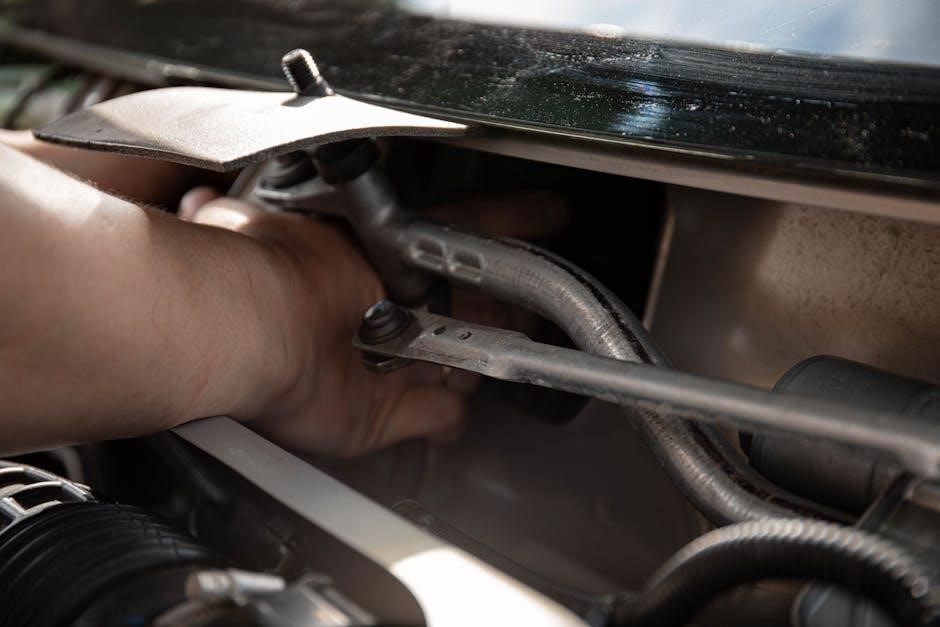
Regular landing gear inspection is crucial for safe Cessna 150M operation․ Examine tires for wear, damage, and proper inflation, referencing manufacturer specifications․ Inspect wheels for cracks, dents, and bearing play․ Check brake lines and components for leaks or corrosion, ensuring optimal braking performance․

Struts should be inspected for oil leaks and proper extension․ Lubricate all moving parts according to the maintenance schedule․ Similar attention to detail is evident in model aircraft construction, like the Cessna 180, where robust landing gear is essential․
Address any discrepancies immediately to maintain ground handling and safety․

Electrical System Maintenance

Inspect battery condition, wiring harnesses for damage, and avionics functionality․ Consistent checks, mirroring detailed model builds like the Cessna 188, ensure reliable operation․

Battery Inspection and Maintenance

Regular battery checks are crucial for Cessna 150M reliability․ Inspect the battery case for cracks or swelling, indicating potential issues․ Examine terminals for corrosion, cleaning them with a baking soda solution if necessary, ensuring a secure connection․

Check electrolyte levels in non-sealed batteries, adding distilled water as needed․ Perform a load test to assess battery capacity and overall health․ Proper maintenance, similar to the meticulous attention given to model aircraft like the Cessna 180 during construction, extends battery life and prevents unexpected failures․ Document all inspections and maintenance performed in the aircraft’s logbook․

Wiring Harness Inspection

Thoroughly inspect the Cessna 150M’s wiring harness for signs of damage, including chafing, cracking, or loose connections․ Pay close attention to areas near moving parts or where wires pass through bulkheads․ Look for evidence of rodent damage, a common issue․

Ensure all connections are secure and properly insulated․ Similar to the detailed work seen in building model Cessnas like the 188 Wagon, meticulous inspection is key․ Replace any damaged wiring immediately․ Document all findings and repairs in the aircraft’s maintenance records, ensuring continued electrical system integrity․

Avionics Troubleshooting

Systematic avionics troubleshooting in the Cessna 150M requires a methodical approach․ Begin with power supply checks, verifying voltage and continuity․ Utilize available schematics to trace circuits and isolate faults․ Common issues include antenna connections, faulty switches, and indicator malfunctions․

Like the careful construction of model aircraft – Cessna 180, 182, or 152 – precision is vital․ Employ appropriate test equipment and consult the aircraft’s maintenance manual․ Document all troubleshooting steps and repairs․ If unable to resolve the issue, consult a qualified avionics technician․

Flight Control System Maintenance

Maintaining Cessna 150M flight controls involves inspecting cables, hinges, and trim, mirroring the precision needed in model builds like the Cessna 188 Wagon․

Control Cable Inspection and Adjustment

A thorough inspection of the Cessna 150M’s control cables is paramount for flight safety․ This involves a meticulous check for fraying, kinks, corrosion, and proper tension․ Cables must move freely within their conduits without binding or excessive play․

Adjustment is crucial; ensure full and correct control surface deflection in both directions․ Verify that the cables are securely attached at all connection points, utilizing appropriate hardware․ Any discrepancies discovered during inspection necessitate immediate correction or replacement, adhering to approved maintenance manuals․ Remember, precision, like in model aircraft builds, is key․

Hinge Point Lubrication

Maintaining smooth operation of control surfaces on the Cessna 150M hinges on proper lubrication․ Regularly inspect all hinge points – ailerons, elevators, and rudder – for signs of wear, corrosion, or stiffness․ Apply an approved aviation-grade lubricant, ensuring complete coverage without over-application, which can attract dirt․

Like the careful construction seen in model aircraft projects, meticulous attention to detail is vital․ Verify full range of motion after lubrication․ Consistent lubrication prevents binding, reduces wear, and contributes to precise control, mirroring the quality found in well-maintained Cessna 180 builds․

Trim System Inspection

The Cessna 150M’s trim system requires periodic inspection to ensure proper functionality․ Check for free and smooth movement of the trim controls, both in the cockpit and at the trim tabs themselves․ Inspect the trim tab linkages for wear, looseness, or corrosion, similar to the detailed attention given to model aircraft builds like the Cessna 188․

Verify that the trim indicators accurately reflect the trim tab positions․ Any binding or unusual resistance should be addressed immediately․ A properly functioning trim system is crucial for reducing pilot workload and maintaining stable flight, mirroring the precision of a Bruckmann Cessna 180․

Component Replacement

Replacing Cessna 150M parts, from motors (like a ZDZ 80 for a Cessna 188) to structural elements, necessitates proper procedures and meticulous documentation for airworthiness․

Recommended Spare Parts Inventory

Maintaining a comprehensive spare parts inventory is crucial for minimizing Cessna 150M downtime․ Essential items include spark plugs, air filters, oil filters, and various hardware components like screws, bolts, and washers․ Consider stocking replacement fluids – oil, hydraulic fluid – and common wear items such as control cables and hoses․

For larger repairs, having access to replacement parts for landing gear, avionics components, and even sections of the airframe (fabric patches, if applicable) can significantly expedite the process․ Graupner Cessna 152 parts, while potentially useful for reference, may not directly apply․ Prioritize parts specific to the Cessna 150M model, ensuring compatibility and airworthiness standards are met․

Proper Installation Procedures

Adhering to precise installation procedures is paramount when replacing Cessna 150M components․ Always consult the official maintenance manual for torque specifications, wiring diagrams, and proper alignment techniques․ Ensure all fasteners are correctly secured and safety-wired as required․

When working with avionics, meticulous attention to wiring connections is vital․ For airframe repairs, like fabric patching (if applicable), follow approved methods․ Projects like the Cessna 180/182/188 builds demonstrate the importance of careful assembly․ Document all installations thoroughly, noting part numbers, dates, and the technician’s credentials for traceability and compliance․

Documentation of Replacements

Comprehensive documentation is crucial following any component replacement on a Cessna 150M․ Maintain a detailed logbook entry specifying the replaced part number, the date of installation, and the total time since new (TSN) or time since overhaul (TSO)․

Include the technician’s certification and any relevant inspection reports․ This practice mirrors the meticulous record-keeping seen in larger aircraft projects like the Cessna 180/182/188 builds․ Accurate records are essential for tracking maintenance history, ensuring airworthiness, and facilitating future inspections, aligning with aviation safety standards;

Scheduled Inspections

Regular Cessna 150M inspections – 100-hour, annual, or progressive – are vital for continued airworthiness, mirroring detailed model aircraft upkeep procedures․

100-Hour Inspection Requirements

The 100-hour inspection, as mandated by regulations, is a crucial checkpoint for Cessna 150M aircraft, particularly those utilized for flight training or rental operations․ This inspection focuses on preventative maintenance, ensuring the continued safe operation of the aircraft․ Key areas include a thorough examination of the engine, propeller, and associated components, checking for wear, cracks, or any signs of deterioration․

Furthermore, the landing gear, flight controls, and structural integrity of the airframe receive detailed scrutiny․ Fluid levels are verified, and the effectiveness of brakes and control systems is assessed․ Similar to the meticulous attention given to model aircraft builds – like the Cessna 180 or 188 – a comprehensive checklist must be followed, and all discrepancies documented and addressed before returning the aircraft to service․

Annual Inspection Requirements

The annual inspection represents a more in-depth assessment of the Cessna 150M’s overall condition than the 100-hour check․ Performed by a certified A&P mechanic, it involves a comprehensive teardown and inspection of numerous systems․ This includes a detailed examination of the engine, airframe, and all critical components, going beyond the scope of routine preventative maintenance․

Similar to the detailed construction of model aircraft like the Cessna 180 or the Vogt Cessna 188, the annual inspection requires meticulous attention to detail․ Corrosion control, fabric condition (if applicable), and proper functioning of avionics are all thoroughly evaluated․ All findings must be documented, and any necessary repairs or replacements completed before the aircraft can be returned to flight, ensuring continued airworthiness․

Progressive Inspection Program

A Progressive Inspection Program offers an alternative to the standard annual and 100-hour inspections for the Cessna 150M․ Approved by the FAA, it divides the annual inspection tasks into smaller, more manageable segments performed throughout the year․ This approach, much like the phased building of model aircraft such as the Cessna 180 or L19 Bird Dog, spreads out maintenance workload and costs․

Each segment must be completed within specified timeframes, and detailed records maintained․ This program requires diligent tracking and adherence to the approved schedule․ It’s crucial to consult with an experienced A&P mechanic to determine if a Progressive Inspection Program is suitable for your operational needs and aircraft usage․